The Question in Justice League Unlimited: Why the Faceless Detective Works So Well
Justice League Unlimited had Superman, Batman, Wonder Woman, Flash—and then it gave us a faceless guy in a trench coat who believed nearly everything was connected.
Somehow, The Question fit right in.
He wasn’t the strongest hero on the Watchtower. He couldn’t fly, outrun Flash, or throw a tank across a city block. What he had was a sharp mind, absolutely no fear of sounding crazy, and a bad habit of digging until he found something everyone else missed.
That made him perfect for Justice League Unlimited.
Who Is The Question in Justice League Unlimited?
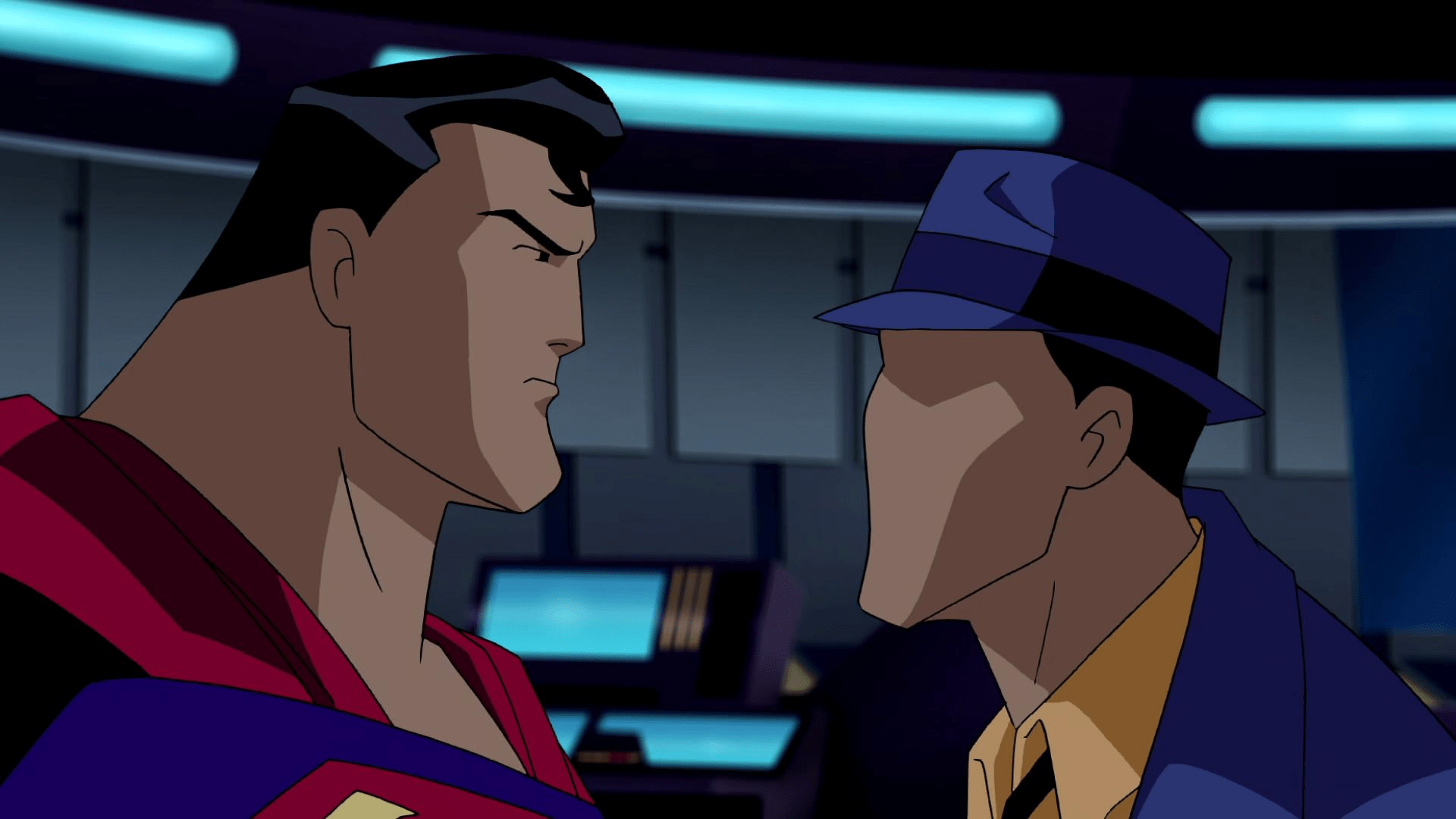
The Question is Vic Sage, a detective and Justice League member who hides his face behind a smooth mask. Jeffrey Combs gives him a low, serious voice that makes even his strangest ideas sound like they deserve at least a second look.
And there are plenty of strange ideas.
The Question sees connections everywhere. He studies patterns, watches people, and digs through information most heroes would probably ignore. Sometimes he sounds completely paranoid, but the joke works because he keeps finding things.
You can laugh at him and still wonder whether he might be right.
“Fearful Symmetry” Tells Us Exactly Who He Is
The Question makes his JLU debut in “Fearful Symmetry,” teaming with Supergirl and Green Arrow as they investigate the mystery behind Supergirl’s disturbing dreams.
It doesn’t take long to understand the new guy.
Green Arrow is skeptical of him, and Supergirl isn’t quite sure what to make of him. The Question doesn’t seem bothered by either reaction. He just keeps investigating, treating almost anything as possible evidence and following the trail wherever it leads.
That could have made him exhausting. Instead, the show makes his paranoia funny without turning him into a joke.
More importantly, his investigation begins exposing something much bigger. The mystery around Supergirl connects to the government activity that eventually becomes part of JLU’s larger Cadmus story.
By the end, the conspiracy guy doesn’t seem nearly as ridiculous as he did at the beginning.
The Question and Huntress Shouldn’t Work This Well
Then comes “Double Date,” where The Question really becomes more than the strange detective hanging around the Watchtower.
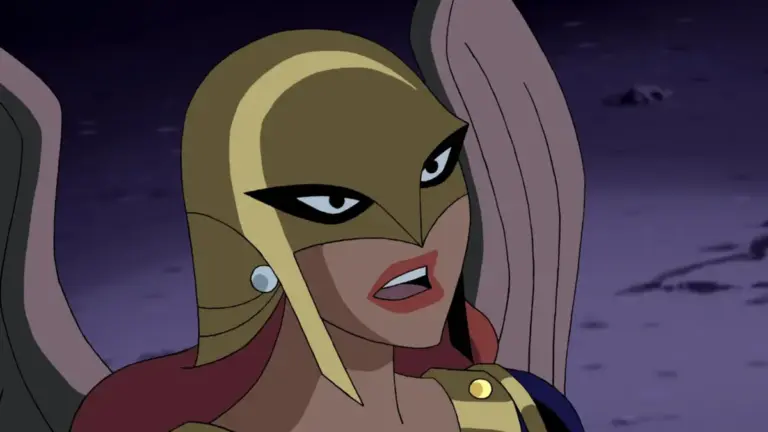
Huntress wants help tracking down Steven Mandragora, and The Question gets pulled into the mission. That gives JLU one of its strangest—and best—character pairings.
Huntress is direct, emotional, and quick to act. The Question would rather observe, investigate, and keep pulling at a mystery until the whole thing comes apart. They irritate each other, but that difference is exactly why their scenes work.
There is also an interesting bit of production history behind the pairing. Gail Simone’s original idea involved Huntress, Black Canary, and Oracle, but DC says Dwayne McDuffie suggested The Question after the original version couldn’t be used. Simone had not read the earlier comic story Batman/Huntress: Cry for Blood, which had also connected Huntress and The Question.
However it came together, JLU found something worth keeping.
Their relationship gives The Question more room to be a person instead of just a walking conspiracy theory. Around Huntress, he can be awkward, loyal, funny, and even romantic in his own very Question-like way.
It helps Huntress too. Neither character fits neatly into the clean superhero mold, and both are willing to push farther than some League members would be comfortable with.
They make sense together partly because, on paper, they really shouldn’t.
“Question Authority” Makes Him Matter to the Bigger Story
If “Double Date” makes The Question more likable, “Question Authority” shows why he matters to the larger series.
By then, tension between the Justice League and Project Cadmus has been building for much of the season. Cadmus is afraid of what could happen if people with the League’s power ever decide they no longer need anyone’s permission.
The Question keeps digging into that fear until he becomes convinced he has found where events are heading.
That is where one of his greatest strengths becomes a problem. He is excellent at collecting pieces and recognizing patterns other people miss, but once he becomes convinced those pieces form the answer, he has a hard time accepting that he could be wrong.
Instead of waiting for the rest of the League, he decides to act.
That puts him directly in Lex Luthor’s path and turns what used to be a funny personality trait into something much more serious.
His paranoia is no longer just there for a laugh. He is frightened by what he believes is coming, and he is willing to make a terrible decision if he thinks it will prevent something worse.
That fits perfectly into the Cadmus story, because the entire conflict asks uncomfortable questions about power, fear, and who gets to decide what is necessary.
The Question spends much of JLU watching everyone else.
In “Question Authority,” the League also has to look at itself.
Jeffrey Combs Never Plays Him Like a Joke
A huge part of The Question’s appeal comes from Jeffrey Combs.
Combs has said that when he saw the character, he keyed in on film noir—the fedora, shadows, mystery, suspense, and suspicion. You can hear that approach throughout the performance.
That choice matters because The Question says some ridiculous things.
Combs doesn’t deliver them as punch lines. The Question believes what he is saying, which makes the funny scenes work without weakening the serious ones.
The same character who can make you laugh while discussing another bizarre conspiracy can later sound genuinely afraid of what may happen to the Justice League.
There is no sudden switch where the comedy character disappears and the “serious” version takes over. It still sounds like the same strange man in the same trench coat.
That consistency gives JLU a lot of freedom with him.
JLU Gives You the Comic Roots Without Assigning Homework
The Question existed long before Justice League Unlimited. Steve Ditko created the original character, and Dennis O’Neil later gave Vic Sage another major interpretation in his DC comic series.
JLU borrows from that history, but it doesn’t expect viewers to know decades of comics before they can enjoy him.
The animated version is easy to understand on his own terms. He is a relentless investigator who distrusts easy answers, notices things other people overlook, and rarely knows when to stop digging.
That is enough to make him work inside the show while still feeling like The Question.
The comics are there if JLU makes you curious enough to look backward. They aren’t required homework before “Fearful Symmetry.”
That is usually the smartest way for an adaptation to handle a character with a long history.
Why The Question Still Stands Out
One of Justice League Unlimited’s greatest strengths was its expanded roster. The show could pull a character from deeper in DC’s lineup, put that character beside Superman or Green Arrow, and see what happened.
But introducing a strange character is easier than making people care about him.
JLU gives The Question several different jobs. He can make a scene funnier simply by being himself. He can carry a mystery. His relationship with Huntress gives both characters something more personal to play with, and when the Cadmus story reaches its most dangerous point, the same paranoia that once made him funny becomes part of the drama.
That range is why he lasts in your memory.
The Question never needed superpowers to stand beside the Justice League’s biggest heroes. He just needed a mystery nobody else was taking seriously.
And with The Question, there is always another mystery.