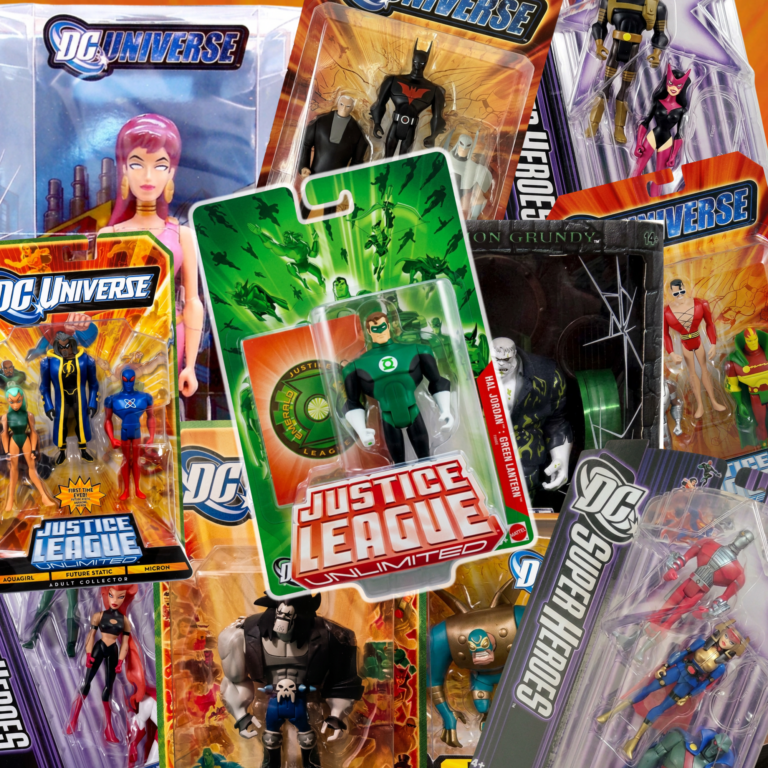

Justice League Unlimited Action Figure Packaging Guide
If you have ever tried to build a complete Justice League Unlimited action figure collection, you already know the packaging can get confusing fast. Two figures can look almost identical on the shelf while the cards, logos, colors, and release formats tell completely different stories.
This guide breaks down the major package styles represented in the Mattel Justice League and Justice League Unlimited line. It is built for collectors who want to identify loose listings, carded figures, rereleases, and multipacks without opening twelve browser tabs to figure out what they are looking at.
Quick answer: start with the logo at the top of the card, then check the dominant card color, the character artwork around the blister, and whether the release is a single figure or multipack. Those four clues will usually point you toward the correct packaging era.
Why JLU packaging matters to collectors
The card is more than something protecting the figure. It can help distinguish an original Justice League release from a later Justice League Unlimited version, reveal whether a figure belongs to the DC Super Heroes or DC Universe period, and separate a standard single from a collector-focused release.
Packaging is especially important when the same character appears more than once. Batman, Superman, and The Flash all received multiple releases, so the card design may be the fastest way to narrow down exactly which version is being offered.
1. The original Justice League blue card
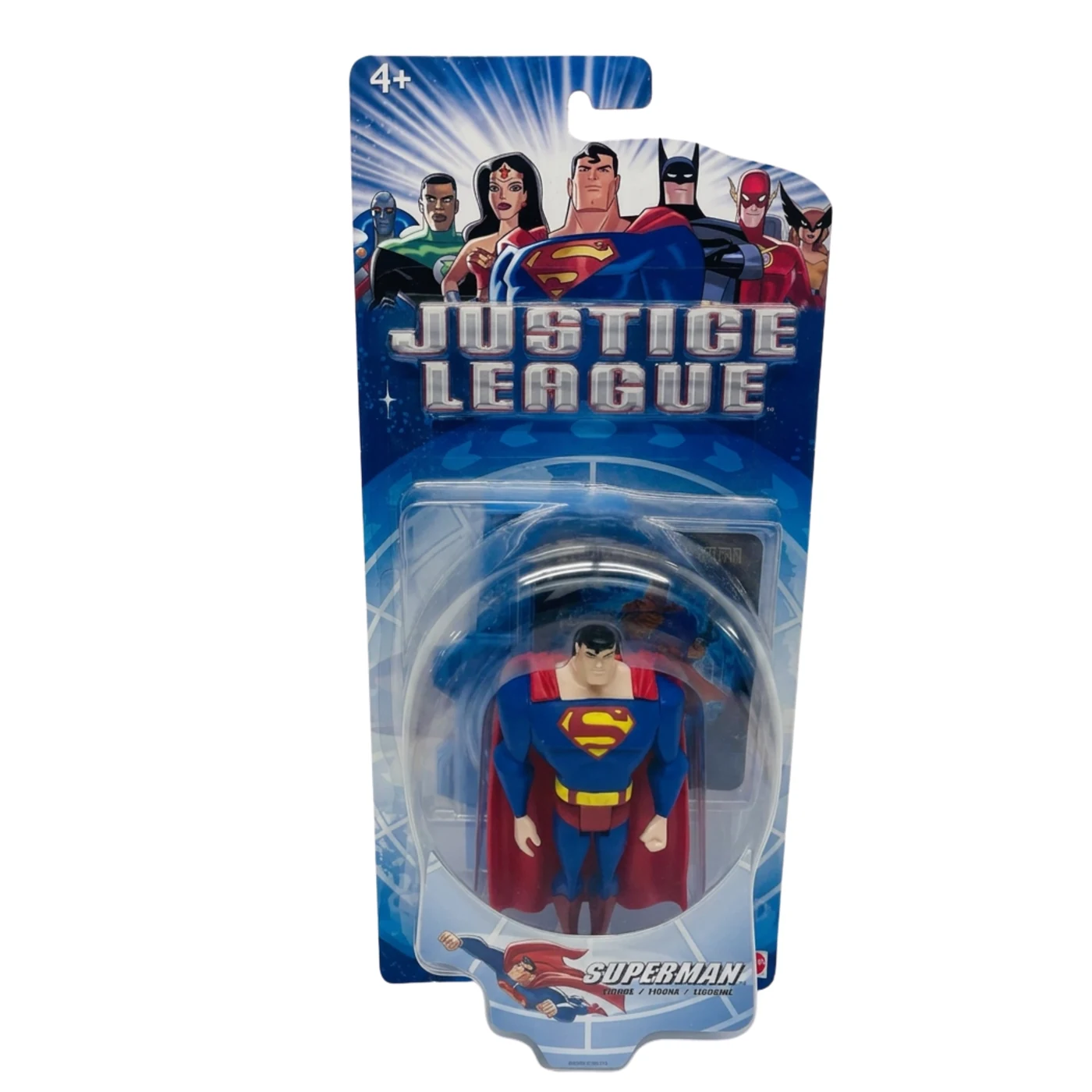
The original Justice League packaging is the clean starting point. The card uses a deep blue palette, the metallic Justice League logo, and artwork of the founding team across the top. The figure sits inside a rounded blister with a character-specific name panel near the bottom.
How to spot it: look for the Justice League logo without the word “Unlimited.” The card art focuses on the original team instead of the much larger roster introduced later.
This is the package style most closely associated with the original animated series line. If you are organizing a display chronologically, these blue cards belong near the beginning.
2. The early Justice League Unlimited blue card

Once the toy line expanded into Justice League Unlimited, the packaging kept much of the familiar blue color but changed the branding. The large silver Justice League Unlimited logo dominates the lower portion, while the card artwork reflects the expanded cast.
The Atom example also includes an exclusive trading card, which is the kind of bonus collectors should check for when comparing complete and incomplete packages.
How to spot it: the blue background remains, but the logo now clearly includes “Unlimited.” The package often feels busier because it has more character art and promotional callouts.
3. The orange DC Super Heroes card
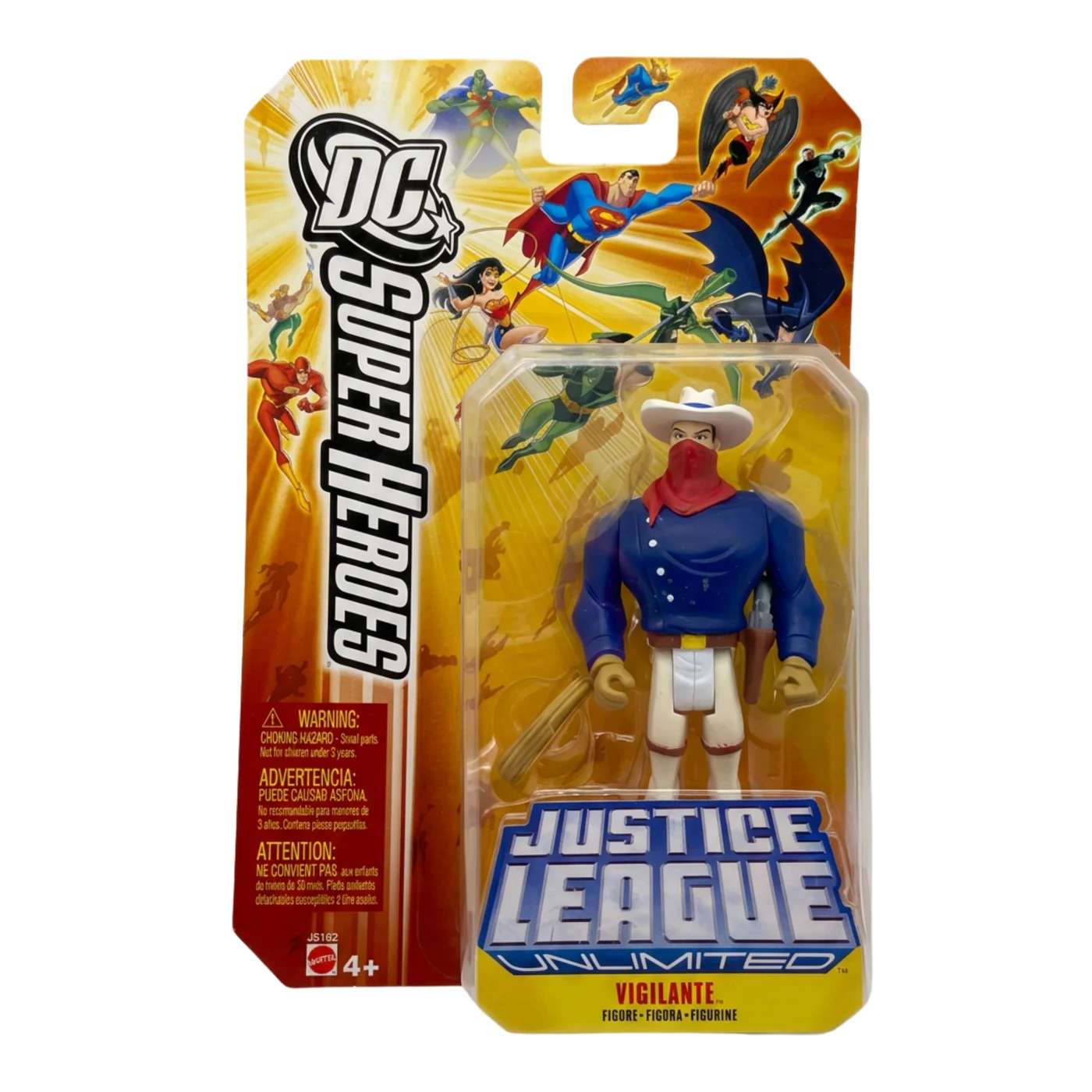
The orange and yellow DC Super Heroes design is one of the easiest transitions to recognize. The bright background replaces the earlier wall of blue, and a large vertical DC Super Heroes logo runs down the left side of the card.
The Justice League Unlimited logo still appears prominently near the bottom, so there is no mistaking which animated line the figure belongs to. The Vigilante package is a strong example because the white hat and blue costume stand out against the warm card color.
How to spot it: orange or yellow card art, a vertical DC Super Heroes logo, and the JLU logo across the bottom of the blister.
4. The purple DC Super Heroes card
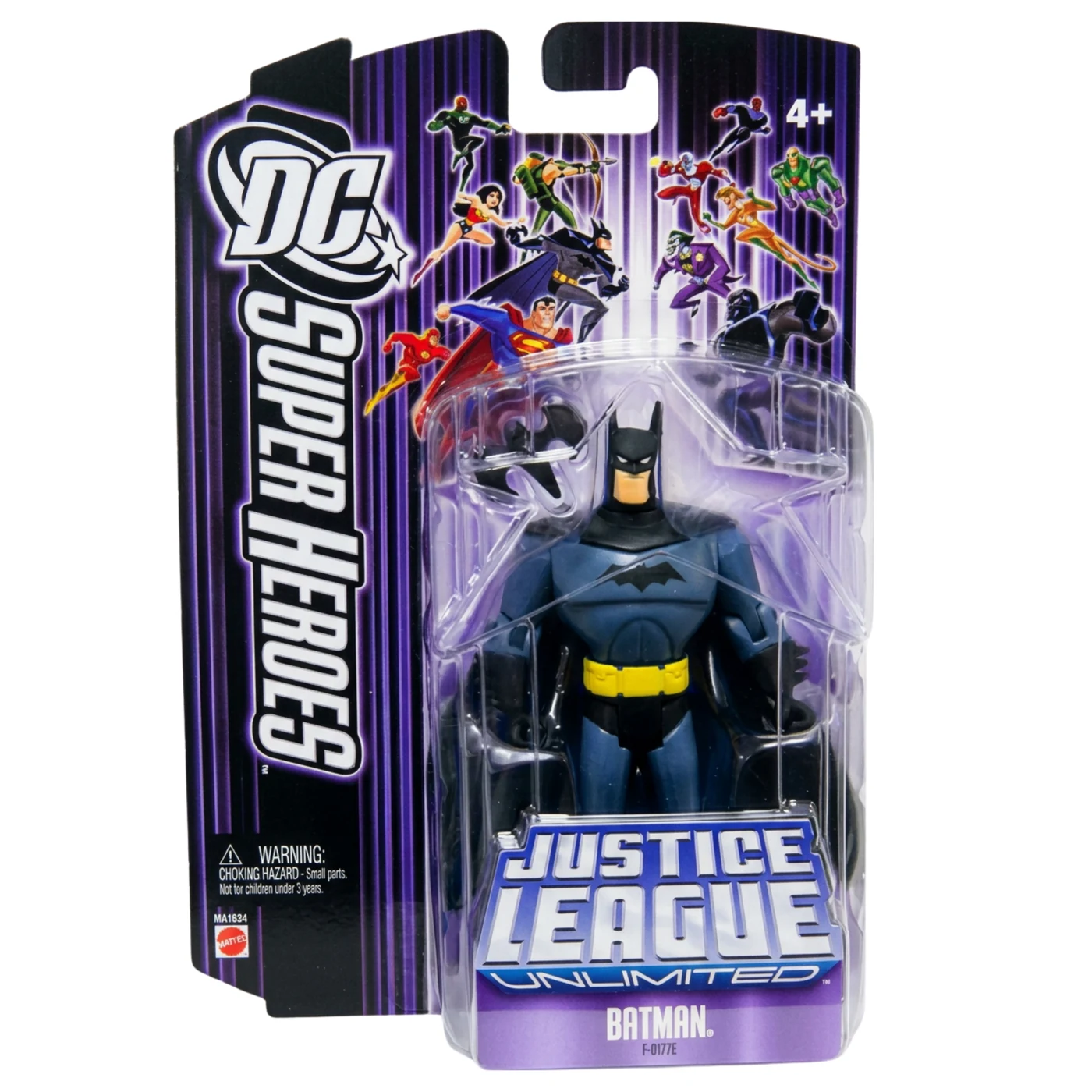
The purple DC Super Heroes card uses the same basic branding structure as the orange version but creates a darker, more dramatic presentation. The vertical logo remains on the left, while purple stripes and a black background frame the character artwork.
This Batman release shows why card color belongs in every collector checklist. Someone searching only by character name could easily miss that two similar figures came from different packaging runs.
How to spot it: black-and-purple vertical striping, the large DC Super Heroes mark on the left, and the silver-and-blue JLU logo near the character name.
5. The DC Universe Fan Collection green-border card

The DC Universe Fan Collection packaging shifts the emphasis again. The DC Universe logo stretches across the top, the background returns to orange, and the character is surrounded by a more collector-oriented presentation.
The green border on this Flash card is an easy visual marker. It separates the silhouette of the card from the orange artwork and makes the release recognizable even in a small marketplace thumbnail.
How to spot it: DC Universe branding at the top, the JLU logo at the bottom, “Fan Collection” below the nameplate, and a colored border around the card.
6. The orange DC Universe Fan Collection card
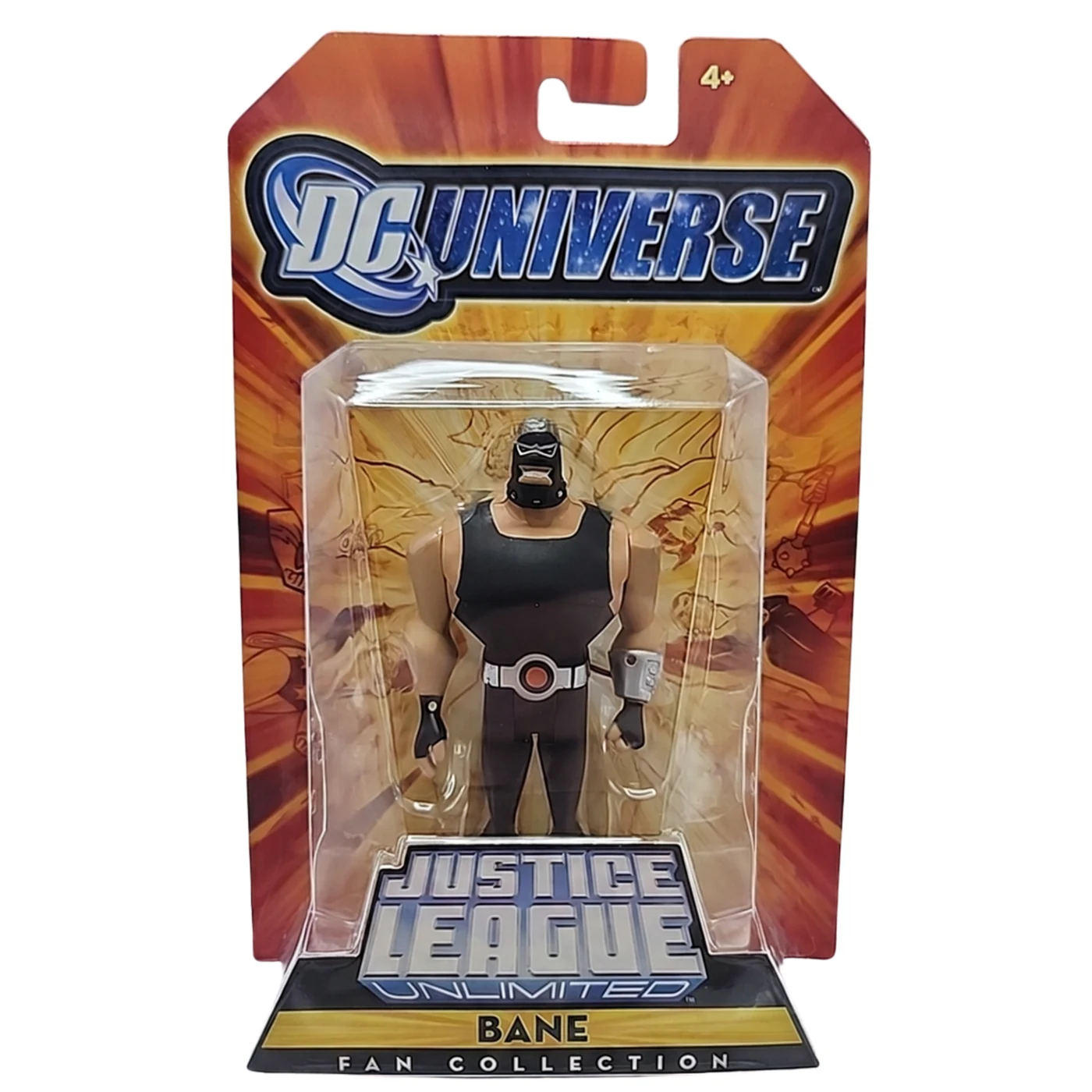
The Bane package shares the DC Universe and Fan Collection branding but uses a different silhouette and color treatment from The Flash card. The top corners are angled, the orange artwork radiates behind the figure, and the gold name strip gives the package a premium look.
This is a good reminder that “DC Universe packaging” is not one single design. Collectors should record the border, card shape, nameplate, and assortment instead of grouping every orange card together.
How to spot it: angled upper corners, the wide DC Universe banner, orange rays, a gold nameplate, and Fan Collection printed along the bottom.
7. DC Universe multipacks
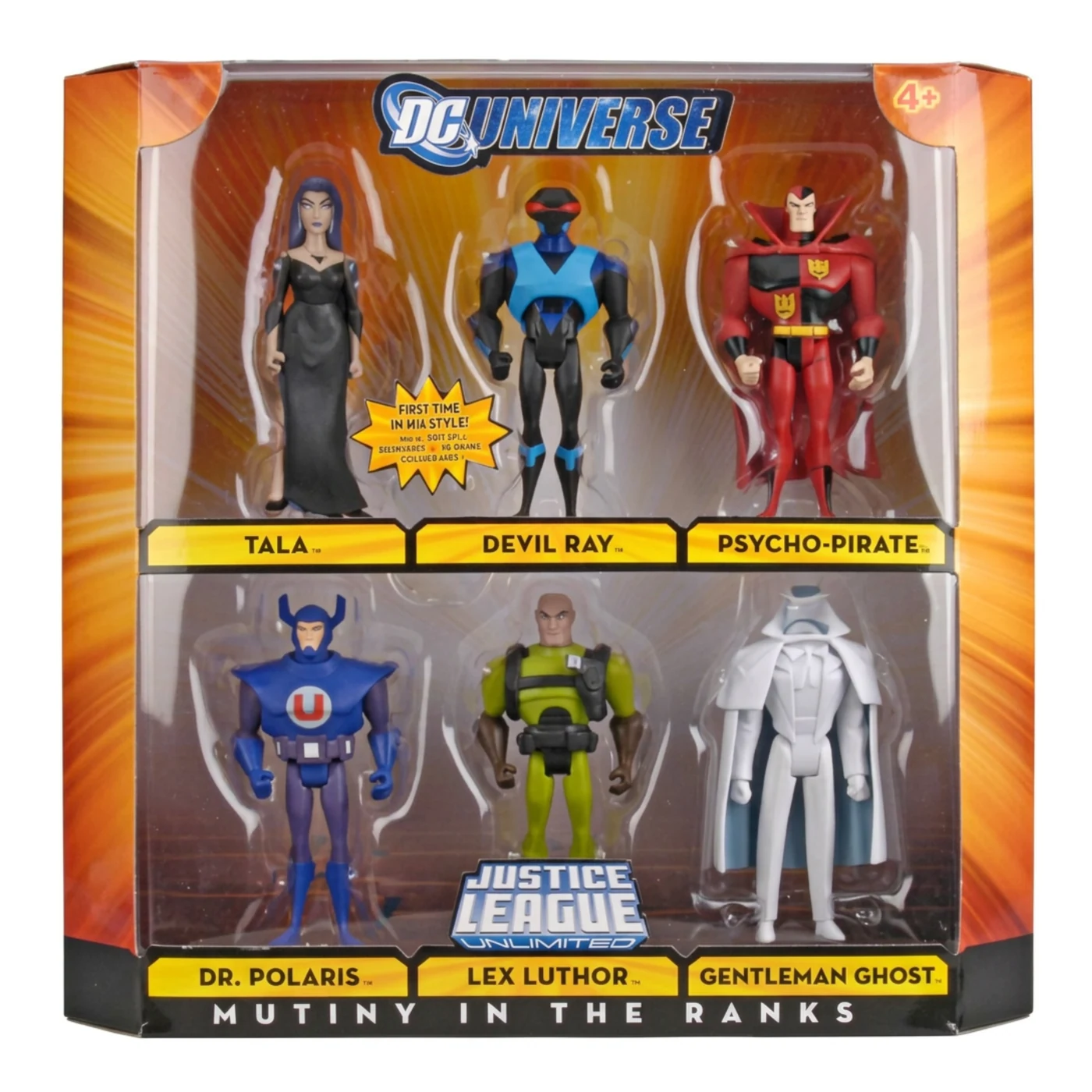
Multipacks need their own category because the packaging and contents are part of the release identity. “Mutiny in the Ranks” places six figures in a wide orange box with individual nameplates: Tala, Devil Ray, Psycho-Pirate, Dr. Polaris, Lex Luthor, and Gentleman Ghost.
A complete boxed set is easy to identify. A loose group is harder. When buying figures separately, compare the exact lineup with a verified checklist so you do not accidentally assemble a group that never appeared together at retail.
How to spot it: a wide DC Universe box, multiple rows of figures, individual yellow name labels, and a set title printed across the bottom.
JLU packaging identification checklist
- Read the main logo: Justice League, Justice League Unlimited, DC Super Heroes, or DC Universe.
- Record the dominant color: blue, orange, purple, green-bordered orange, or another variation.
- Check the release format: single, multipack, oversized figure, or exclusive.
- Look for inserts: trading cards, accessories, stands, and promotional pieces can be missing from opened packages.
- Photograph the front and back: the back card can contain assortment details that are not visible from the front.
- Do not identify a release by character alone: popular characters were issued in several package styles.
What to check before buying a carded JLU figure
Zoom in on the blister edges and look for lifting, yellowing, cracks, dents, or excess glue. Check the card for bends around the hanger tab and inspect the bottom corners for crushing. If a listing uses only one distant photo, ask for clear pictures of the front, back, and edges.
For multipacks, confirm every figure and accessory is present. For releases with inserts, make sure the trading card or bonus item is visible. A package can look sealed while still being incomplete.
Most importantly, buy the version that fits your collection. A mint card is great for a boxed display, but a clean loose figure may be the better choice if your goal is to build the animated roster without paying for packaging you do not plan to keep.
Build your Justice League Unlimited collection
We are continuing to document the Mattel 4.5-inch line by character, package type, release format, and supporting evidence. Use our Justice League Unlimited action figure checklist to browse the collection and compare figures as the database grows.
Collector note: packaging variations and retailer-specific releases can be easy to misidentify. If you own a carded example that adds a missing detail, clear front-and-back photos can help improve the archive.