
Justice League Unlimited Ending Explained: Epilogue vs. Destroyer
“Destroyer” is the final episode of Justice League Unlimited. “Epilogue” is an earlier JLU season finale that gives Terry McGinnis and Bruce Wayne a future-set closing chapter. Both feel like endings because they resolve different parts of the animated universe.
“Epilogue” is not an extra episode that aired after “Destroyer.” In the familiar three-season JLU listing, it ends season two; “Destroyer” ends season three.
Spoilers below for “Epilogue,” “Alive!” and “Destroyer,” including a major Batman Beyond revelation. If you have not finished the shows, use our spoiler-conscious watch-order guide first.
Why does Epilogue feel like the ending?
The episode shifts away from the League’s present-day adventures to an adult Terry McGinnis seeking answers from Amanda Waller. Its central question is personal: how much of Terry’s life belongs to him, and how much was arranged by someone else?
There is also a production reason for its sense of closure. DC’s Amanda Waller retrospective describes “Epilogue” as once intended to conclude the entire DC Animated Universe. That is different from saying it remained the final JLU episode. Another season followed.
Read as a character ending, it closes a conversation that began with Batman Beyond: Terry inherits a demanding role, but he still has to decide what kind of person will wear the suit.
Is Terry McGinnis Bruce Wayne’s son?
Yes, in this animated continuity. “Epilogue” reveals that Waller’s project used Bruce’s genetic material to alter Warren McGinnis’s reproductive DNA, making Bruce Terry’s biological father. Warren remains the father who raised Terry. The revelation is about Waller’s intervention, not an affair between Bruce and Terry’s mother.
That distinction matters to the episode’s emotional argument. A biological connection does not erase Terry’s upbringing or make all his choices someone else’s achievement. Our reading is that the ending asks him to accept the truth without surrendering ownership of his life.
Why Batman’s scene with Ace matters
Waller’s account includes Batman sitting with the dying Ace. He offers her comfort instead of treating her only as a dangerous power to be neutralized.
For us, that quiet scene is the episode’s clearest statement about Batman’s legacy. The essential quality worth preserving is his compassion. A project can reproduce genetic material; it cannot manufacture the decision to stay with someone who is frightened and alone.
This is why “Epilogue” works as more than a parentage twist. It contrasts Waller’s urge to control the future with the human choices that make a hero worth remembering.
What happens at the end of Destroyer?
“Destroyer” brings the focus back to the League. Following “Alive!,” Darkseid’s invasion forces the heroes and their usual enemies into a temporary alliance. The scale suits a finale about an organization large enough to defend the whole planet.
Superman gets his famous moment of letting loose, but the resolution also involves Lex Luthor and the Anti-Life Equation. Luthor and Darkseid disappear. The episode does not provide a detailed explanation of their ultimate fate, so a recap should not present either character’s confirmed death as an established fact.
The final send-off leaves the heroes active. Our interpretation is that the audience’s time with this team is ending, while the team’s work continues. That makes “Destroyer” the League’s finale in a way the Terry-focused “Epilogue” is not.
Which episode should you watch last?
For a straightforward first watch, follow the series listing: “Epilogue” in its season-two position, then the final season through “Destroyer.” If you have not watched Batman Beyond and want to preserve its surprises, save “Epilogue” until after that series and Return of the Joker.
Moving “Epilogue” to the end of a wider marathon is an editorial viewing choice. It does not change which episode is JLU’s official series finale. Season labels can differ by release, so use the episode titles rather than a season number alone.
Does either finale end every DCAU story?
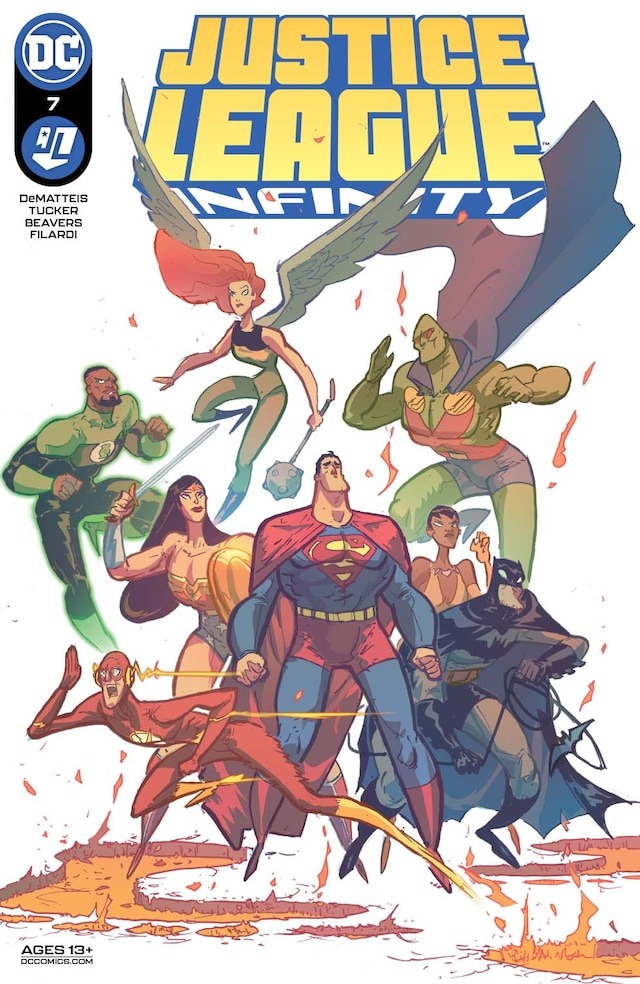
No. A satisfying character ending does not mean no later work can revisit the setting. DC subsequently returned to the animated world in Justice League Infinity, and viewers can also explore Justice League vs. the Fatal Five.
Our movies and comics after JLU guide explains those options. For Waller’s earlier conflict with the League, use the Cadmus arc guide.
Sources and episode references
- Apple TV: Epilogue, season two episode 13
- Apple TV: Destroyer, season three episode 13
- DC: Amanda Waller and Epilogue’s intended role
- Batman Wiki: Warren McGinnis and the parentage revelation
- The World’s Finest: Ace
- The World’s Finest: Destroyer episode guide and reviews
- DC: Justice League Infinity
Featured image: Terry McGinnis and Superman in Batman Beyond, used to illustrate the connected animated universe. This is not a still from “Epilogue” or “Destroyer.” Series imagery © DC / Warner Bros.